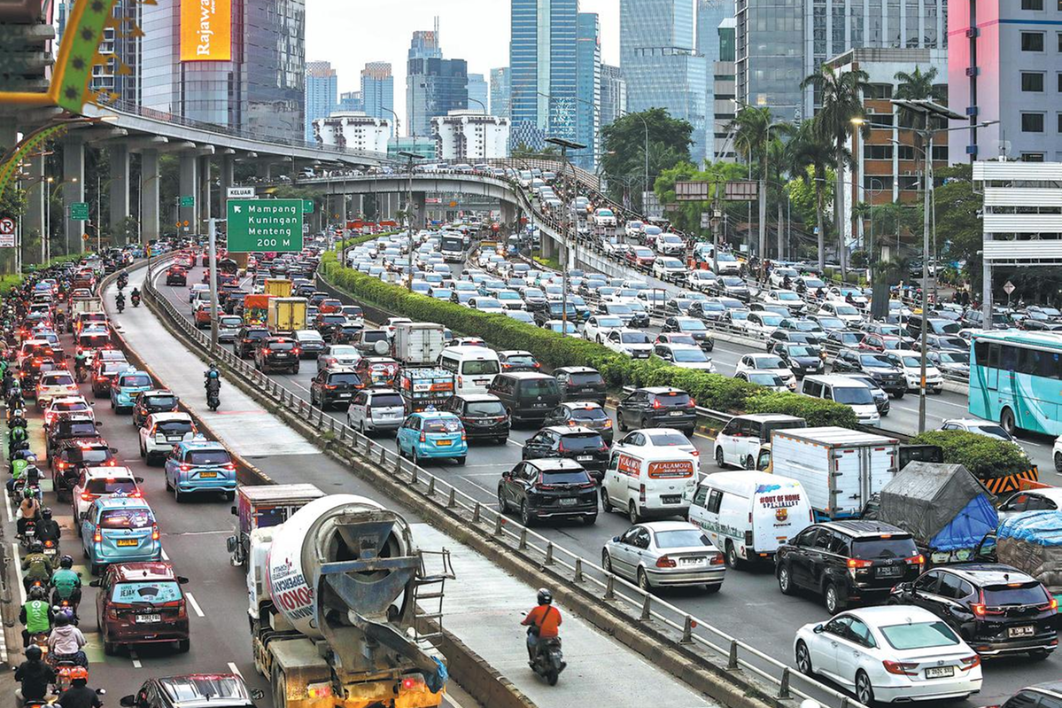
A metropolis stuck in gridlock
As Indonesian capital approaches 500th anniversary, Jakartans long for seamless transit
Updated: 2026-06-30 10:53


Editor's note: In this weekly feature China Daily gives voice to Asia and its people. The stories presented come mainly from the Asia News Network (ANN), of which China Daily is among its 20 leading titles.
Zakaria, 24, waited for a less crowded commuter line train so he could sit on his trip home to Daru, Banten, from Tanah Abang Station in Central Jakarta. He had just transferred from Bekasi, West Java, where he had undergone a hemodialysis session in a hospital, and was feeling too weak to stand through the journey.
He braces himself for the overcrowded commuter train journey twice a week for his treatment, as crossing three provinces would be highly inconvenient if public transit did not connect cities beyond Jakarta.
"Going by ambulance is the only alternative, but that's for emergencies. I can only rely on the commuter line, while other transport modes don't reach Daru," he told The Jakarta Post.
Zakaria said integrated transport around the capital is essential for patients like him who rely on long-distance mobility for treatment. Even reaching Tangerang, the nearest city in Banten, is more difficult for him than traveling to Jakarta or Bekasi.
"It's easier to go to Jakarta because it's faster and more accessible. It already feels like Daru is connected to Jakarta," he said. But still he wished that trains bound from Jakarta to Daru were more frequent and more punctual.







Editor's Pick