Beyond EVs, electronics, more Chinese brands surge across ASEAN markets
By Wang Zhuoqiong | CHINA DAILY | Updated: 2026-05-22 09:30


Chinese consumer brands are rapidly expanding across Southeast Asia, moving beyond electronics and electric vehicles into sectors such as beauty, food service and home appliances, according to a report by Euromonitor International.
Its "Rise of Chinese Brands in Southeast Asia" report found that the ASEAN economies of Indonesia, Malaysia, the Philippines, Singapore, Thailand and Vietnam account for 95 percent of the region's $4 trillion GDP. The region has become the largest and fastest-growing export destination for Chinese goods.
In 2024, China's exports to Southeast Asia reached $587 billion, up 12 percent year-on-year. More than 70 percent of Chinese companies operating in ASEAN plan further expansion, citing strong performance and untapped consumer demand, said the China Council for the Promotion of International Trade.
With a population exceeding 650 million, 63 percent under 40 and a median age of 31, Southeast Asia's consumer market is thriving. This demographic fuels demand for e-commerce, livestreaming shopping, fintech solutions and affordable premium products.
Countries like Vietnam and Indonesia are outpacing China in GDP growth, offering Chinese brands a rapidly expanding consumer base with rising disposable incomes and accelerating urbanization, said the report.
Chinese companies have long dominated sectors such as EVs, consumer electronics and home appliances. In EVs, BYD is now the top brand in most Southeast Asian markets and the number-one car brand in Singapore, surpassing Toyota. In home appliances, Chinese brands' share of the air conditioner market rose from 9 percent in 2015 to 25 percent in 2024. Haier, Midea and Gree have become household names. In smartphones, Chinese brands' market share has increased from 21 percent in 2014 to over 60 percent today.
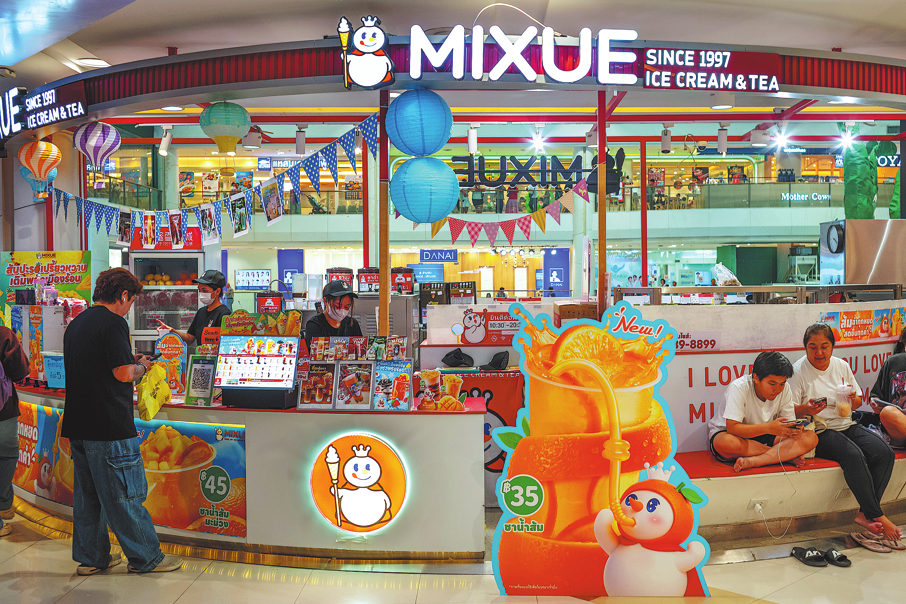
Now, Chinese companies are breaking into sectors once considered difficult for foreign entrants. In beauty and personal care, mass-market skincare brands achieved a 115 percent compound annual growth rate (CAGR) from 2019 to 2024. In the consumer food and beverage sector, chains such as Mixue, Luckin Coffee and Chagee are expanding aggressively. Mixue outlets grew 80 percent between 2019 and 2024, and by April 2026, Mixue had 4,153 overseas stores, while Chagee reached 262, said the China Chain Store and Franchise Association.
Nathanael Lim, APAC insight manager for beverages at Euromonitor International, said: "Chinese coffee and tea chains maintain consumer interest through relentless product innovation, often unveiling new menu items monthly. Significant investment in research and development and direct ingredient sourcing allows them to craft unique flavors that resonate with local palates."
Partnerships with local players are also central to expansion. In January, Eastroc Beverage signed a cooperation agreement with Indonesia's Salim Group to establish a joint venture, with investments of up to $200 million. Since 2021, Eastroc has exported products to 30 countries and regions.
Euromonitor said deep localization is key to Chinese brands' success, surpassing mere price competition. Many beauty and F&B companies register as local entities, adapt products for tropical climates and employ local teams for livestreaming and marketing activities.
"To move beyond transactional entry points, Chinese companies must transition from exporters to long-term ecosystem participants. Embedding within local value chains, adapting to cultural and economic contexts, and cultivating trust — through local manufacturing, customer service and community engagement — will be essential to sustaining growth," the report said.
wangzhuoqiong@chinadaily.com.cn






Editor's Pick