From Business Districts to Urban Ecosystems: The Next Chapter of China’s CBD Development
By Fu Xiaoya | chinadaily.com.cn | Updated: 2026-09-23 22:08


Editor’s Note:China’s 15th Five-Year Plan (2026-30) calls for accelerating the development of new quality productive forces and building a modern industrial system. Against this backdrop, China’s central business districts are evolving from traditional office clusters into key hubs for innovation, industrial upgrading and global connectivity.
To explore this transformation, we invited Jane Yang, EY Greater China Government & Public Service Market Segment Leader, to share her views on the evolving role, competitiveness and future opportunities of China’s CBDs.

Q1 China is entering a new stage of development under the 15th Five-Year Plan, with greater emphasis on new quality productive forces and a modern industrial system. Against this backdrop, what changes are taking place in China’s central business districts, and how are these changes redefining their role?
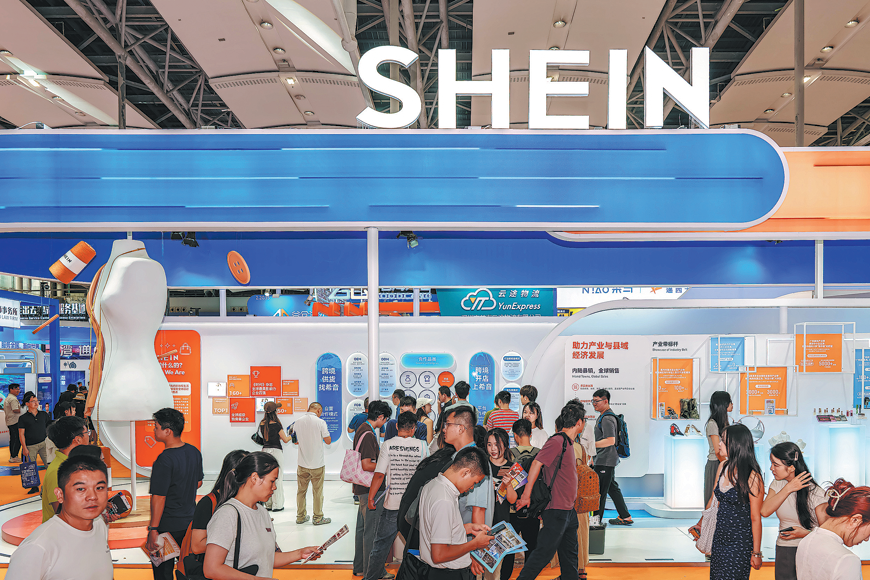
China’s business districts are entering a new stage of development, evolving from traditional office clusters toward integrated business ecosystems. In the past, CBDs were primarily associated with financial institutions, professional services companies and multinational headquarters. Today, however, they are increasingly attracting digital economy and AI companies, creative industries, and Chinese companies expanding into global markets. As the composition of businesses changes, so does the role of the CBD — from providing office space and conventional business services to organizing innovation resources, facilitating industrial collaboration and connecting businesses with global markets.
The transformation is already visible across several major Chinese CBDs. Guangzhou Tianhe, for example, has made the digital economy a strategic focus, while Beijing CBD has used platforms such as the Beijing CBD Forum to strengthen dialogue and collaboration among business districts around the world. Increasingly, China’s CBDs are becoming urban nodes that connect businesses, innovation and global markets, rather than simply places where businesses are located.
Q2 How can central business districts foster new quality productive forces and build stronger ecosystemsforhigh-value-added sectors such as technology, finance and professional services?
Fostering new quality productive forces is not simply about attracting technology companies; it is about building an ecosystem that can support their growth and innovation. As technology, the digital economy and globally oriented companies become increasingly present in CBDs, their needs extend beyond traditional legal, financial and accounting services to include data circulation, cross-border compliance, investment and financing, and access to international resources. For example, Beijing CBD is leveraging platforms such as the Beijing International Big Data Exchange to strengthen its capacity for data circulation and trading.
At the same time, CBDs can proactively open up real-world application scenarios, turning the district itself into a platform for testing and commercializing new technologies. In Jinan CBD, for instance, the low-altitude economy and smart logistics applications are being piloted through coordinated drone and autonomous delivery solutions.
By moving from providing space to providing data, services and real-world scenarios, CBDs are becoming important platforms for nurturing new quality productive forces.
Q3 Beijing CBD ranked sixth globally in the 2025 Global Business Districts Attractiveness Report and has remainedamongthe global top 10 for three consecutive editions. Based on your perspective, what has driven thegrowing global competitiveness of China’s leading central business districts?
Three factors stand out as key drivers of the growing competitiveness of China’s leading CBDs.
The first is continued institutional innovation and improvement of the business environment. By expanding openness, streamlining public services and strengthening international professional services, CBDs are becoming increasingly attractive to global businesses and capital.
The second is the transformation of the industrial base — from traditional headquarters, finance and business services toward technology, the digital economy and creative industries, giving CBDs greater adaptability and resilience.
The third is the evolution of their international role — from simply bringing global resources in to connecting both inbound and outbound flows. In the past, Chinese CBDs primarily served as gateways for multinational companies entering China. Today, they are increasingly helping Chinese companies expand globally through cross-border services, international cooperation platforms and business district networks.
Q4 You have noted that the“B”in China’s CBD is evolving from“Business”to“Bridging”and“Blending”. What does this shift look like in practice, and how is it reshaping the relationship between business, urban life and talent?
When I mentioned that the “B” in CBD is evolving from “Business” to “Bridging” and “Blending”, I was describing the increasingly complex role that business districts play in the urban economy.
Bridging is about creating connections — across industries and regions, and increasingly between Chinese companies and global markets. As Chinese companies expand internationally, CBDs are becoming important platforms for cross-border investment, treasury management, international trade and global operations. Sanya CBD, for example, is leveraging the institutional advantages of the Hainan Free Trade Port to develop cross-border investment, offshore trade and international financial services.
Blending, meanwhile, is about integrating work, life, culture and innovation. The CBD of the future should not simply be a place where people work during the day; it should function as a more vibrant urban community. Beijing CBD’s initiatives in building renewal and international talent services, together with Tianhe’s integration of offices, culture, retail and public facilities, illustrate this direction. For innovation-driven companies in particular, frequent and informal interaction between people is not just a lifestyle benefit — it is an important part of the innovation ecosystem itself.
Q5 As competition among cities intensifies, how can central business districts develop distinctive strengths and avoid homogeneous development in their industries and functions?
The key to avoiding homogenization is not for every CBD to pursue the same portfolio of “high-end industries”, but to identify where they can create a distinctive advantage. As business districts move from large-scale development toward regeneration and higher-quality growth, they need to look more closely at their industrial base, innovation resources, degree of openness, consumer market and talent pool, and develop clearer and more specialized positioning.
Different cities can therefore follow different paths. International CBDs such as those in Beijing and Shanghai can further strengthen their roles in global headquarters, cross-border finance and high-end professional services, while regional business districts can build on local industries and research capabilities. Hefei Swan Lake CBD, for example, has leveraged its innovation ecosystem and the Sci-Tech resources to strengthen technology commercialization, while Chongqing Jiefangbei CBD has built its competitiveness around distinctive retail and consumption experiences shaped by its mountainous urban environment. The most competitive CBD does not necessarily need to be the most comprehensive — it needs to be the most distinctive and difficult to replace.
Q6 Looking toward 2030, what characteristicswill distinguishChina’sglobally competitive central business districts, and how do you expect their role to evolve during the 15th Five-Year Plan period?
Looking toward 2030, I believe globally competitive Chinese business districts will be defined by four characteristics. The first is digitalization. CBDs will increasingly evolve from traditional centers of finance and business into digitally enabled hubs for new quality productive forces, with competitiveness shifting from location and physical space toward the ability to organize data resources and open up real-world application scenarios. Business districts therefore need to strengthen their digital governance and industry service capabilities, while making better use of real-world scenarios to support innovation and industrial development.
The second is a stronger focus on people and adaptability. CBDs will place greater emphasis on spatial quality, public space and quality of life, evolving from places primarily designed for offices into more integrated urban environments where work, life, culture and social interaction coexist. This will require continued efforts to renew existing spaces and integrate diverse functions to better meet the increasingly flexible needs of businesses and talent.
The third is sustainability. As green development and climate resilience become increasingly important to global businesses and investors, sustainability will move beyond being a “value-add” to becoming a core dimension of long-term competitiveness. Business districts will need to further strengthen green and low-carbon development and build a broader service ecosystem around areas such as ESG and green finance.
The fourth is international connectivity and networked development. CBDs will move from relatively standalone development toward greater regional and global collaboration, shifting from simply attracting resources to facilitating the two-way allocation of global resources. This will require stronger cooperation among cities and business districts, enhanced capabilities to organize and connect global resources, and greater international engagement in emerging areas such as digital trade and green finance.



Editor's Pick