Gas prices up as Iran war escalates
By Belinda Robinson in New York | chinadaily.com.cn | Updated: 2026-07-22 10:30


American motorists are growing weary of paying higher gas prices again after renewed military tensions between the US and Iran stoked fears of a disruption in the Strait of Hormuz and gas prices rose to over $4 per gallon this week.
The national average for regular gasoline was $4 a gallon on July 20, according to the American Automobile Association, rising 13 cents per gallon, or 3 percent, over the past week amid the tensions in the Middle East. It is the first time the national average hit $4 since June 17, and it comes despite the June US-Iran memorandum of understanding to stop the military conflict and a 60-day negotiation period.
Sanjay Patel, 70, from Manhattan, was filling up his white Mercedes Benz SUV at a BP gas station in Brooklyn, New York when he expressed how annoyed he was at the rising price of gas. He pointed out that he was paying over $4 at the location, as it was $4.15 for regular, $4.55 for silver and $4.95 for diesel.
"I want it to go back below $4," Patel told China Daily, who blamed the rise in gas prices on the ongoing war with Iran. "Well, it's because of the war, they block the Strait of Hormuz, with all of that there's no supply. I think all of the world is suffering because everywhere it is high. But America has enough oil, but they are not really distributing it to the public.
"The government should end the war. That is the most important. Secondly, they have to make sure all these big oil companies, BP, Shell and ExxonMobil should not be focusing on selling the oil outside of the country. America is in a war. I have to pay more to the fill up the tank. A full tank is $60."
US crude oil traded between $81 and $85 per barrel on Tuesday, according to Reuters. Brent crude futures added 2 percent to end the day at $91.01, according to The Wall Street Journal. It was the first close above $90 since June 11.
Brian James, 55, from Brooklyn, New York, drives a black Jeep Wrangler.
He told China Daily: "Gas prices are ridiculous right now. Seriously. It costs $90 for me to fill up this car. In the past, it was $70. Instead of being able to buy certain things or save money, then you have to outlay in transportation. It's taking a hit on everyone.
"I blame the government. They're making it hard for everyone right now, we're spending money where we shouldn't have to. The oil companies are passing on the costs to the customer. I remember when the gas price was in the three-dollar range, like $3.60 or whatever."
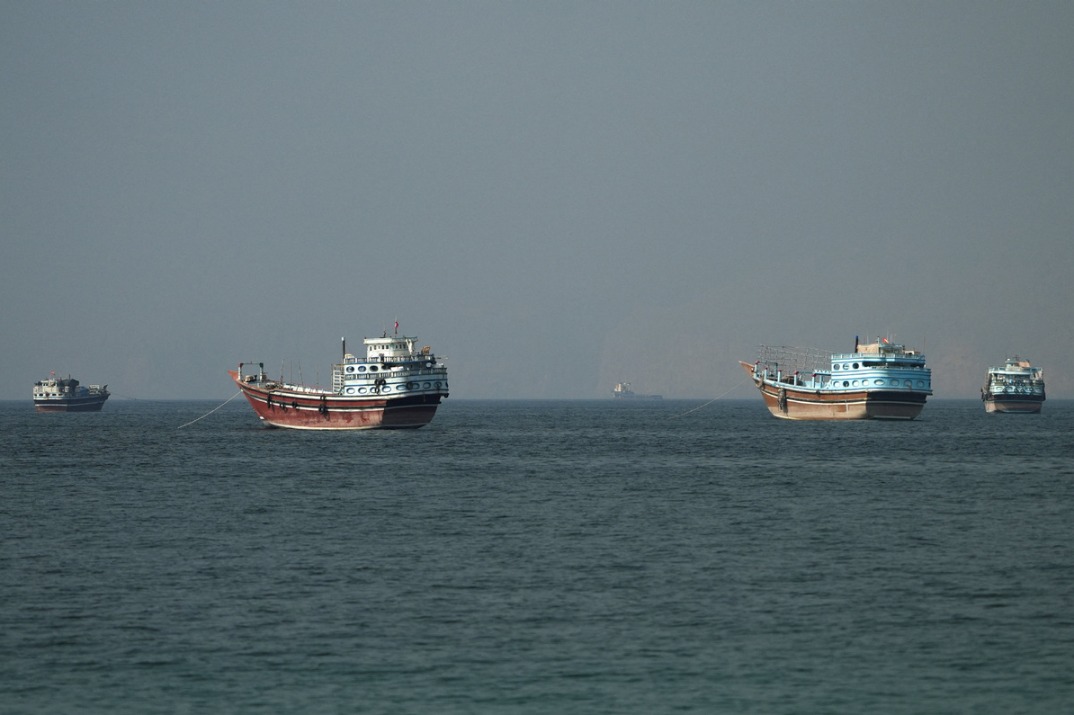
On Tuesday, a tanker in the Strait of Hormuz came under attack near Oman, according to the United Kingdom Maritime Trade Operations.
Iran's Islamic Revolutionary Guard Corps told state-linked Tasnim News Agency: "As long as American hostilities in the region continue, the Strait of Hormuz will remain closed."
The Houthis in Yemen said on Monday that they had implemented a blockade on Saudi Arabia's shipments through the Red Sea's Bab al-Mandeb Strait. This could cause even more blocks for shipping routes, warn experts.
In March, shortly after the US-Israel attacks began on Iran, gas prices in the US hit an average of $4 a gallon.
In May, they were $4.50 a gallon, then they dropped back down to $4 after the US and Iran agreed to the MOU in mid-June.
American drivers got some relief by early June, when prices at the pump were $3.79, the American Automobile Association found. But they have gradually crept back up this month.
On July 7, the US government revoked a sanctions waiver on Iranian oil. President Donald Trump said a day later that the ceasefire agreement with Iran was "over" and he would reinstate the Iranian blockade.
Three US service members were killed from July 17 to 19. Trump vowed to make Iran pay "many times over" for the deaths.
Nearly 100 US troops have been injured in the past two weeks amid renewed fighting with Iran, The Pentagon said.
The Strait of Hormuz transported 20 percent of the world's oil supplies before the war began.
Over 130 ships per day used to cross the waterway, but from July 17 to 19 that plummeted to only 30 ships, MarineTraffic and Kpler said.
US Defense Secretary Pete Hegseth told the Senate Appropriations Committee on Tuesday that the war had cost $37.5 billion so far.
For most motorists, especially those who rely on their vehicles for work, lower gas prices cannot come back soon enough.
Sulaiman, 31, an Uber Eats delivery driver, was filling up his small motorbike at a gas station in New York and checking his phone on his way to deliver food to a customer.
"I'm so busy, I have to deliver this food," he told China Daily. "Higher gas prices make it harder for people like me who need to earn money as more of my money goes towards transportation costs. I just wish they'd make things better for all of us out here working hard."
belindarobinson@chinadailyusa.com





Editor's Pick