Trump pauses escort mission citing dialogue
Tehran denies US has control Strait of Hormuz, and warns of a 'decisive response'
By Belinda Robinson in New York | chinadaily.com.cn | Updated: 2026-05-06 11:37


US President Donald Trump announced on Tuesday he was pausing the day-old US operation to escort commercial ships through the Strait of Hormuz "for a short period of time".
In a post on Truth Social, Trump said the pause comes following the request of Pakistan and other countries. He said that "Great Progress has been made toward a Complete and Final Agreement with Representatives of Iran".
Trump said in his post that the US blockade of Iranian ports will "remain in full force and effect", and the administration is going to "see whether or not the agreement can be finalized and signed".
Earlier in the day, US officials said the fragile ceasefire with Iran was "not over", despite US warships shooting down cruise missiles and drones that Iran fired at the ships and vessels the US Navy was guiding through the Strait of Hormuz on Monday, as well as two days of Iranian attacks on the United Arab Emirates.
"No, the ceasefire is not over," US Defense Secretary Pete Hegseth said at a Pentagon news briefing on Tuesday.
Hegseth and Chairman of the Joint Chiefs of Staff General Dan Caine, the US military's top officer, added that Iran's attacks had not reached what Caine called "major combat operations".
Trump told reporters in the Oval Office that Iran knows what to do to violate the four-week ceasefire.
Asked how he'd act if Iran does violate the agreement, he said, "Well, you'll find out, because I'll let you know.
"They know what to do" and "they know what not to do, more importantly", he said.
Trump announced Project Freedom on Sunday, with the US Navy beginning to guide ships through the strait on Monday morning.
Hegseth said on Tuesday the operation was temporary as the US was "not looking for a fight".
"Right now the ceasefire certainly holds, but we're going to be watching very, very closely," he added.
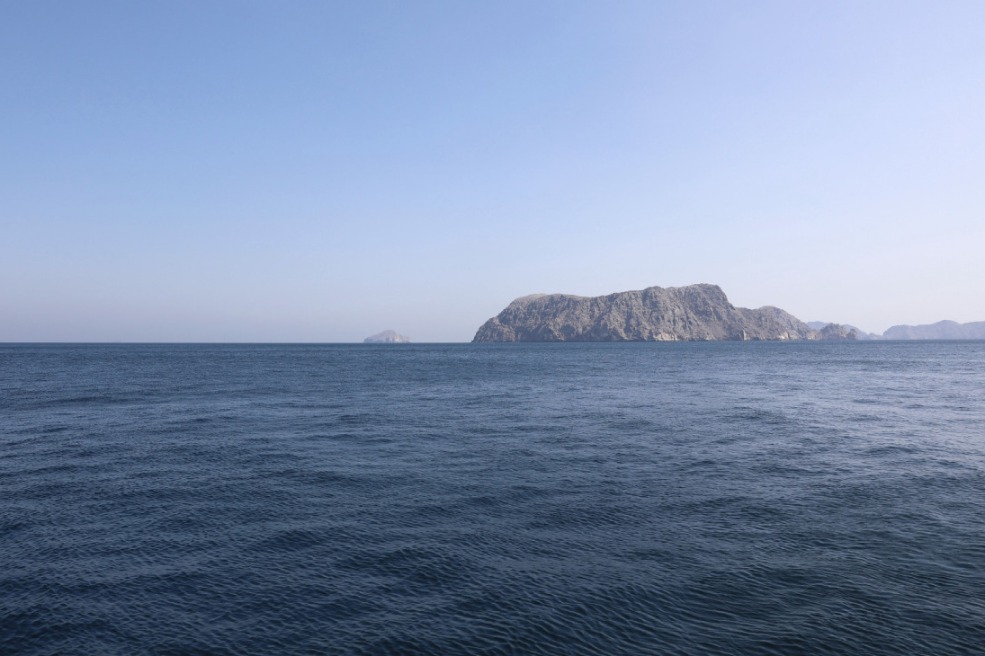
The vital waterway has been severely restricted for weeks.
On Monday, US Central Command said American forces had shot down the missiles and drones aimed at US vessels, and no ships were hit.
US officials said American helicopters destroyed six Iranian small boats, a claim Iran disputed.
At least two commercial merchant ships made it through the strait under US escort on Monday. However, that is far from the estimated 130 international ships that used to go through the strait daily before the war.
Shipping giant MAERSK said one of the escorted ships belonged to their fleet.
Iran's state TV reported that two small civilian cargo boats were hit on Monday, killing five civilians.
No ships made the journey as of Tuesday afternoon. US officials said it was a quieter day in the strait.
About 1,600 remain trapped in the area, The Associated Press reported.
Hegseth said the US Navy was working to free them.
"We're ensuring that we have control of that strait, which we do," he added.
But Iran's state broadcaster denied US control, calling their effort a failure.
Iran's parliament speaker and chief negotiator, Mohammad Bagher Qalibaf, said they would retain control of the strait and ignore US demands.
He wrote on X: "We know full well that the continuation of the status quo is intolerable for America; while we have not even begun yet."
On Tuesday, Iran issued a new map of the Strait of Hormuz with an expanded Iranian area of control.
The Iranian Revolutionary Guard Corps warned vessels to stick to the corridors it had set or face a "decisive response".
Widespread delays have slowed international shipments of vital oil and gas, as well as fertilizer, and caused energy prices to soar.
Iran used drones and missiles to attack neighboring UAE on Monday and Tuesday.
The UAE said its missile defense systems had intercepted 15 missiles and four drones fired by Iran.
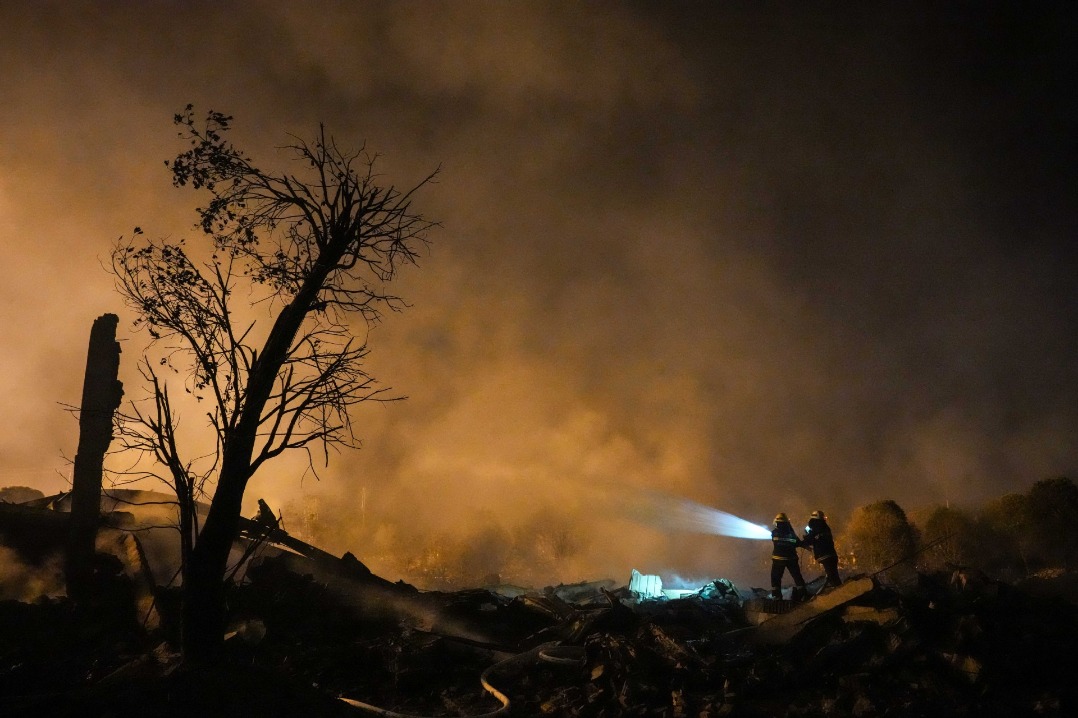
Authorities in the eastern emirate of Fujairah said one drone sparked a fire at a key oil facility, wounding three Indian nationals.
Indian Prime Minister Narendra Modi called the targeting of UAE civilians and infrastructure "unacceptable".
Pakistan and Saudi Arabia also condemned the strikes.





Editor's Pick