Foreign tourists flocking to see China for themselves
By CHEN WEIHUA | China Daily | Updated: 2026-04-23 20:58


The news that China is likely to surpass the United States as the world's largest tourism economy in the next few years is extremely exciting, and its significance goes far beyond the economy.
China's tourism sector grew by 9.9 percent in terms of GDP contribution in 2025, the London-headquartered World Travel & Tourism Council said in a report on April 16.
This growth was more than double the global average and much higher than the 0.9 percent registered by the US.
The US still holds the lead, with its travel and tourism sector contributing $2.63 trillion to global GDP in 2025 compared with China's $1.75 trillion. But China is catching up.
Tourist spending in China shot up by more than 10 percent last year, compared to a 5 percent decline in the US. WTTC President and CEO Gloria Guevara, quoted by Bloomberg, said China could surpass the US by the end of the decade if the current trends continue.
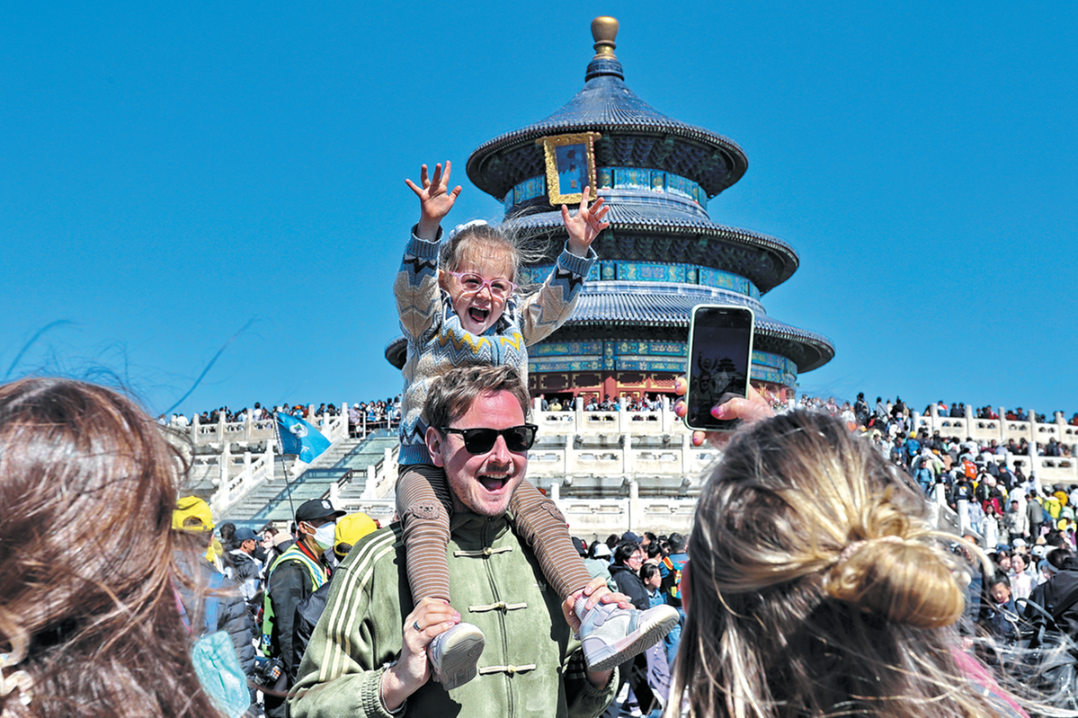
China's unilateral visa-free policy, applicable to 50 countries since it started in late 2023, has clearly contributed to the influx of foreign tourists.
More than 30 million foreign tourists entered China visa free in 2025, accounting for 73.1 percent of the total arrivals of foreign nationals and a jump of 49.5 percent over the previous year.
It's a hint that the unilateral visa-free policy could be extended to more countries to further boost the tourism sector.
Meanwhile, China's National Immigration Administration reported that 697 million border crossings by Chinese and foreign nationals were recorded in 2025.
The revival of international travel and tourism is particularly significant after the severe disruption during the years of the COVID-19 pandemic. China has been the prime target of hysterical smear campaigns waged by some hostile Western governments, politicians and news outlets in the past years.
While new technologies help people connect to each other and learn about the world virtually, they cannot substitute for the experience of meeting people face-to-face and visiting places in person.
After all, seeing is believing. Foreign tourists are welcome to visit China and see the country first-hand — its strengths as well as its shortcomings — so they can make their own judgment instead of being misled by the false narratives of politicians and the media.
I have spent the past week serving as a tour guide for two visitors from the US.
At the Shanghai Circus World on Tuesday, we noticed that more than half the audience consisted of foreigners, a clear sign of China's renewed global appeal.
When we reached the famous match-making corner in the People's Park, some foreign travelers were reading the introduction in Chinese with translation apps on their cellphones.
I am not particularly a fan of the corner and wrote critically about it when it was launched more than 20 years ago.
But it reflects the concern that Chinese parents have for their children's marriage, a social reality that intrigues foreign visitors.
My guests were also struck by the convenience of public infrastructure. Whether in Shanghai or Suzhou, they found public toilets easy to locate, free of charge and generally clean. This is in sharp contrast to the challenges faced while looking for public toilets in Europe where I spent most of the past seven years. Even if you find one, its use is often not free of charge.
Finding one in the US is also hard, especially in cities like New York and Washington.
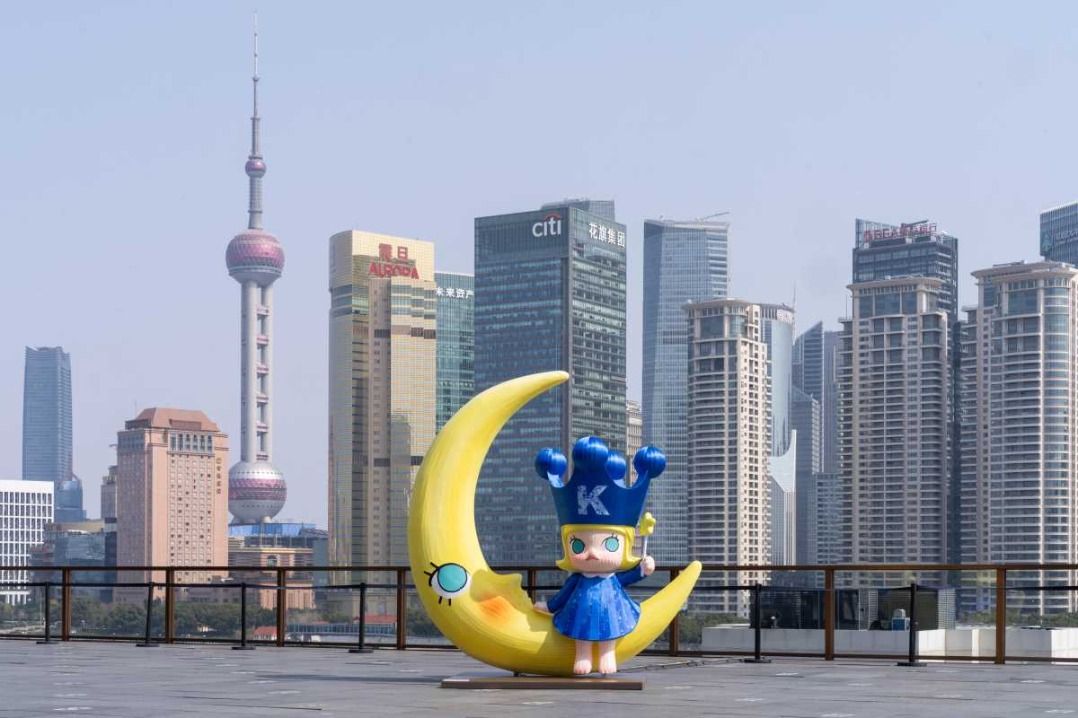
Shanghai, my home city, is indeed amazing. It has become cleaner, more efficient and very modern, in some ways even futuristic with its Pudong skyline.
Time Out magazine recently ranked Shanghai as the top destination in Asia and the second-best destination in the world to visit in 2026, just behind Melbourne in Australia. This recognition is particularly noteworthy, given that the city went through a very challenging and prolonged lockdown during the pandemic.
Even so, there is much to be improved to facilitate international travelers. For example, the Suzhou Museum, designed by the legendary architect I.M. Pei, and the UNESCO-listed Humble Administrator's Garden, both need more instructions and signage in English.
While apps are widely used to make reservations and buy tickets, the requirement for identification at entry points of museums and gardens can be confusing for foreign visitors.
Although Chinese cities are very safe and people are friendly, civility and public spitting still need attention.
In today's world, misunderstanding has become a huge challenge.
If China's tourism economy overtakes that of the US in the coming years, it should not be framed as a race between the two countries. It would only reflect a growing eagerness among people around the world to see the real China with their own eyes.
The author is a China Daily columnist.
chenweihua@chinadaily.com.cn





Editor's Pick