Reviving the Hani legacy
Through education, art, and technology, a young leader brings Hani culture into the modern world while honoring ancestral traditions.
By MENG WENJIE | China Daily | Updated: 2026-03-04 07:48


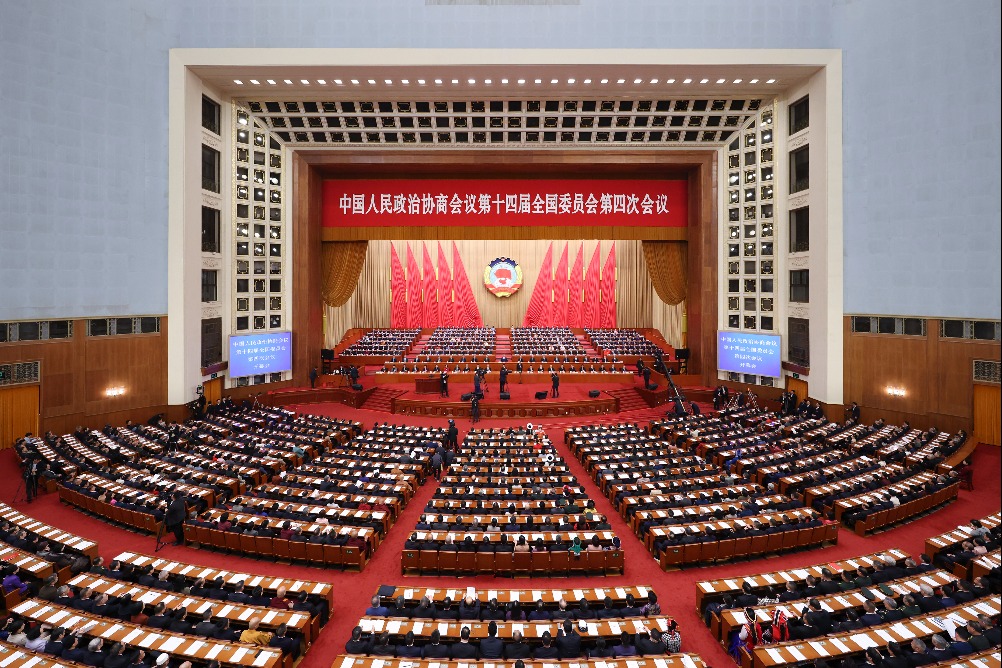
On March 4, the fourth session of the 14th National Committee of the Chinese People's Political Consultative Conference (CPPCC) opened in Beijing.
For 30-year-old Yang Yuni, a member of the CPPCC National Committee, this marks her fourth time attending China's top political advisory body. Once again, she entered the Great Hall of the People dressed in her signature ethnic costume, intricately adorned with traditional patterns.
"These patterns represent our ancestors' deep reverence for nature," Yang explained. "I wear this to showcase the vibrancy of Hani culture while fulfilling my duties here in Beijing."
A member of the Hani ethnic group, Yang's journey from the Honghe Hani and Yi autonomous prefecture in Yunnan province to China's political stage has been one of self-discovery and cultural preservation.
"I speak not only for myself, but also for my community and the protection of our legacy," Yang said.
Her story begins in a village nestled among the iconic Hani rice terraces, where daily life has long been intertwined with cultural traditions. After a day in the fields, villagers would gather around a fire to sing Hani folk songs and perform the Lezuo dance, all without sheet music or rehearsals.
"In their movements, you could feel the echoes of nature and the ever-changing seasons of the terraces," Yang recalled. "That sense of joy and ease is part of who we are."
For Yang, singing and dancing were once simply part of village life. It wasn't until 2013, when the Honghe Hani Rice Terraces were inscribed on the UNESCO World Heritage List, that she realized these traditions held much greater significance.
"I was in high school when I saw the terraces being repeatedly featured on TV, alongside the local songs and dances. It was then that I realized what I had always taken for granted was, in fact, the heart of my hometown," Yang said.
But just as Hani culture began gaining international recognition, Yang noticed a worrying trend: fewer young people seemed able to sing Hani folk songs or perform the Lezuo dance.
"A veteran Hani artist once told me that these folk songs carry the history of our ancestors' migration. If we lose them, we can never reclaim them," she said. "At that moment, I truly felt the weight of being Hani."
Related Stories
Photo