Tokyo cannot bury the past, no matter how hard it tries
By LI YANG | China Daily | Updated: 2025-12-15 09:58


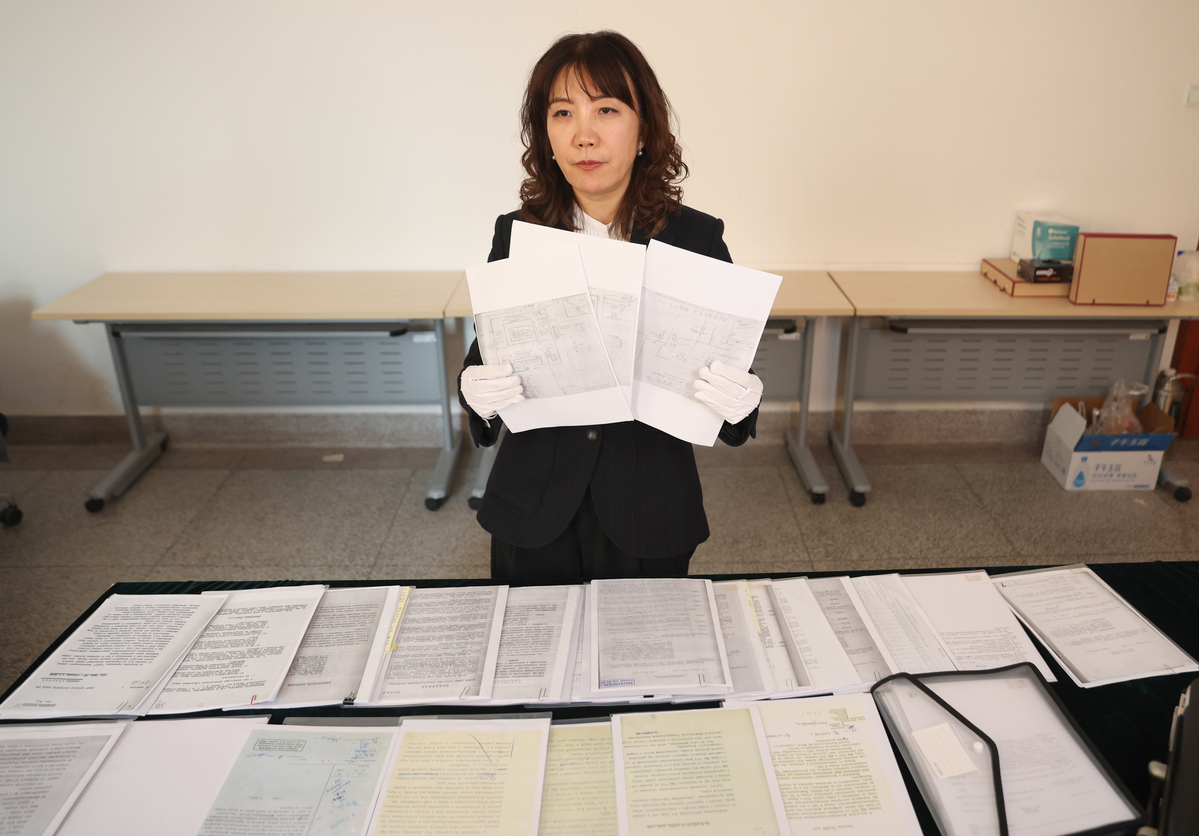
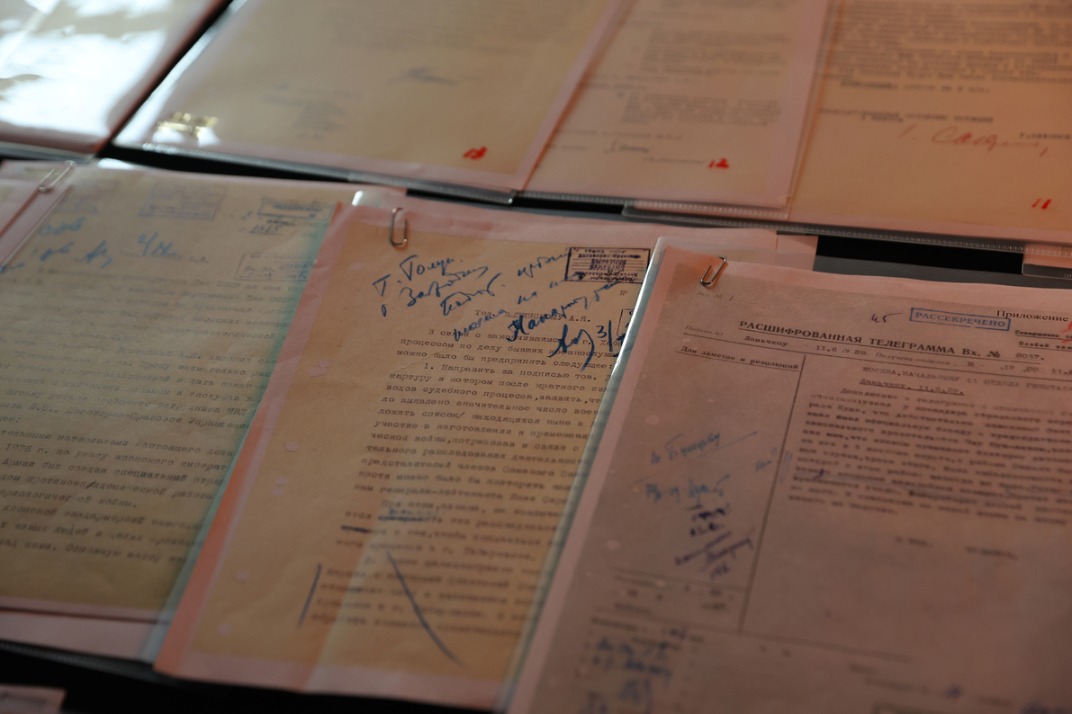
The release of newly declassified Soviet Union archives related to Japan's notorious Unit 731 carries significance far beyond the unveiling of the historical documents. Made public by China's Central Archives on Saturday, the 12th national memorial day for the victims of the Nanjing Massacre, the materials, which were transferred by Russia, once again provide irrefutable evidence of the systematic crimes committed by the invading Japanese forces during the Chinese People's War of Resistance Against Japanese Aggression (1931-45) and the World Anti-Fascist War and reinforce the imperative of safeguarding historical truth.
The archives, covering the period from 1939 to 1950, include Soviet interrogation records of Unit 731 members, investigation reports into the unit's crimes and internal official correspondence. They shed light on the Soviet-led investigations during the early stage of the 1949 Khabarovsk War Crimes Trials, during which 12 Japanese war criminals were publicly tried for manufacturing and using biological weapons and for conducting inhuman medical experiments. More than 200 individuals linked to Unit 731's crimes were identified in the process. The defendants' confessions leave no doubt that Japan's germ warfare violated international laws and conventions and constituted a premeditated, organized and state-directed crime.
Unit 731, headquartered in Harbin, Heilongjiang province, served as the nerve center of Japan's germ warfare program during the war. Under the guise of medical and scientific research, the unit carried out horrific human experiments that resulted in the deaths of at least 3,000 people from China, the Soviet Union and other countries and regions. The crimes were not isolated excesses by rogue actors. As the newly released archives demonstrate, they were embedded in a top-down system involving the Japanese military command and supported by the state's wartime apparatus.
What makes the historical records particularly valuable is their role in complementing and corroborating the extensive evidence already preserved in China. Together, these materials form a complete and interconnected chain of proof, reinforced by trial records, expert medical appraisals and firsthand confessions by high-ranking perpetrators. Some of the documents, disclosed publicly for the first time, reveal in chilling detail the scale on which biological weapons were produced and their actual use against Chinese civilians, confirming that Japan's germ warfare extended far beyond laboratory experiments and caused large-scale human suffering. The biological warfare Japan carried out using germ weapons developed by Unit 731 and other similar secret units, which primarily involved plague-infected fleas, cholera, anthrax and typhoid/dysentery bacteria, is estimated to have killed hundreds of thousands of people.
The timing of the release is equally meaningful. Dec 13 this year marks the 88th anniversary of the Nanjing Massacre, during which about 300,000 Chinese civilians and unarmed soldiers were brutally killed after Japanese troops captured the then capital of China in 1937. The unveiling of Unit 731 archives on this solemn day underscores a clear message: Remembrance is not about dwelling on hatred, but about honoring victims, upholding truth and preventing history from being distorted or repeated.
Despite the abundance of ironclad evidence, however, some right-wing politicians in Japan continue to try and deny or downplay their country's wartime atrocities, even questioning the existence or details of Unit 731's war crimes and the Nanjing Massacre. More alarmingly, a series of actions and statements by the Sanae Takaichi government has sent dangerous signals of historical revisionism and a revival of militaristic thinking. Such attempts to whitewash aggression and glorify force run counter to the postwar international order and threaten regional peace and stability.
History offers a clear lesson that Japanese militarism was a disastrous path that not only caused immense suffering to the Chinese people but also to many other Asian countries, and ultimately Japan itself.
Japan's crimes of that era are too numerous and too well-documented to be erased by denial or selective memory. Upholding a correct historical perspective on that period of history is not only a matter of justice for the victims, but also a shared responsibility of the international community.
The newly released archives stand as a powerful reminder that truth, though sometimes buried, cannot be silenced forever. All peace-loving countries should remain vigilant against the Takaichi government's attempts to deny history and revive militarism, and should work together to ensure that the tragedies of the past never happen again. Remembering history is not an obstacle to reconciliation; it is its indispensable foundation.






Editor's Pick