


Thrills designed for 'wimps' make giant leap in tourism industry
Self-deprecating 'wonang travel' trend prizes comfort, minimal exertion over adrenaline rush










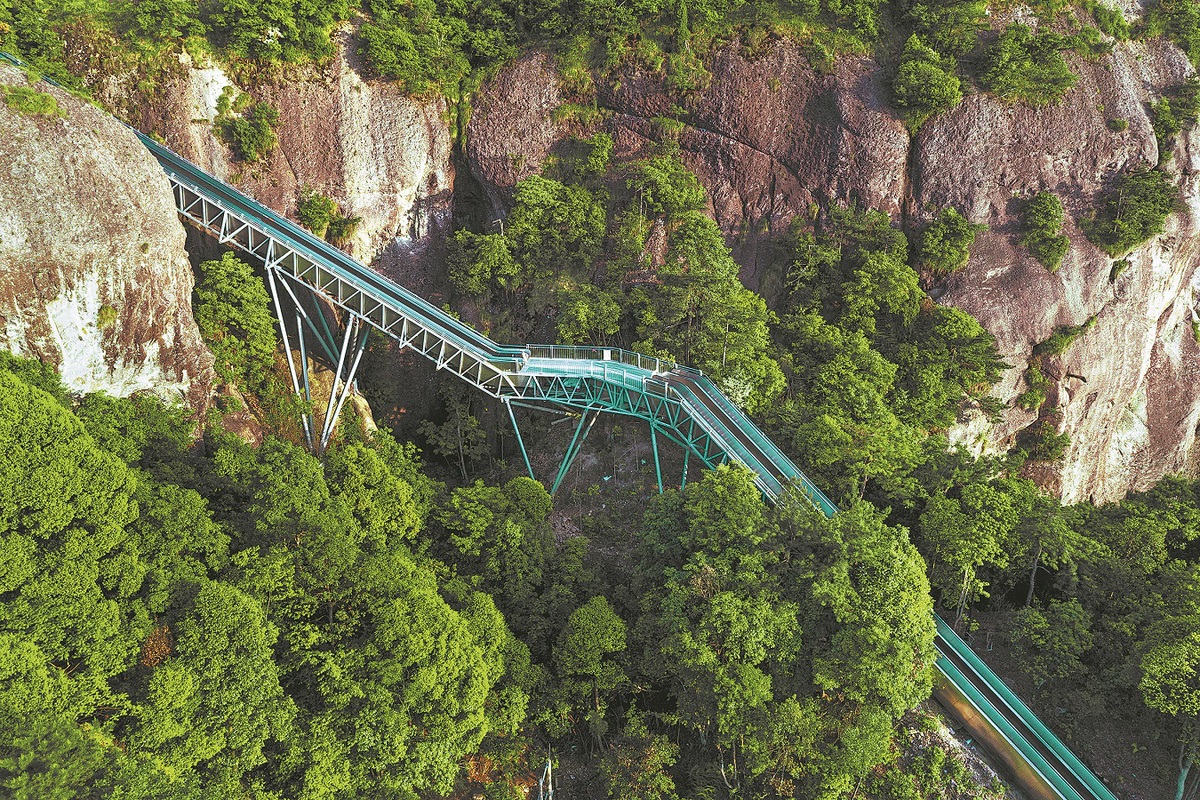
In the past, 26-year-old e-commerce professional Cao Peiqiang's idea of an adventurous travel thrill was a theme-park pirate ship or a cable car ride.
"I'm a man who sought out fresh air and scenic views, not heart-stopping drops," said Cao from Hangzhou, Zhejiang province.
Yet, on a November weekend, he stood on a cliff precipice in a scenic spot about a two-hours' drive from his workplace, locked in a battle between his own curiosity and a crippling fear that had always held him back.
With a cliff drop of 40 meters, the jump in front of him wasn't for the fainthearted.
But Cao wasn't about to plunge toward earth on the end of a retractable rubber bungee rope. Instead, he would be winched gently down, experiencing the thrill with a greater sense of security.
"The moment you step onto that platform, there's nothing in front of you — just air," Cao said.
Cao's siren call to the majestic, cloud-draped valleys of the Yunshang Caoyuan (Cloud Meadow) scenic area in Huzhou city had been a social media trend known as a "wonang" jump, which translates as a "wimp" or "spineless" jump.
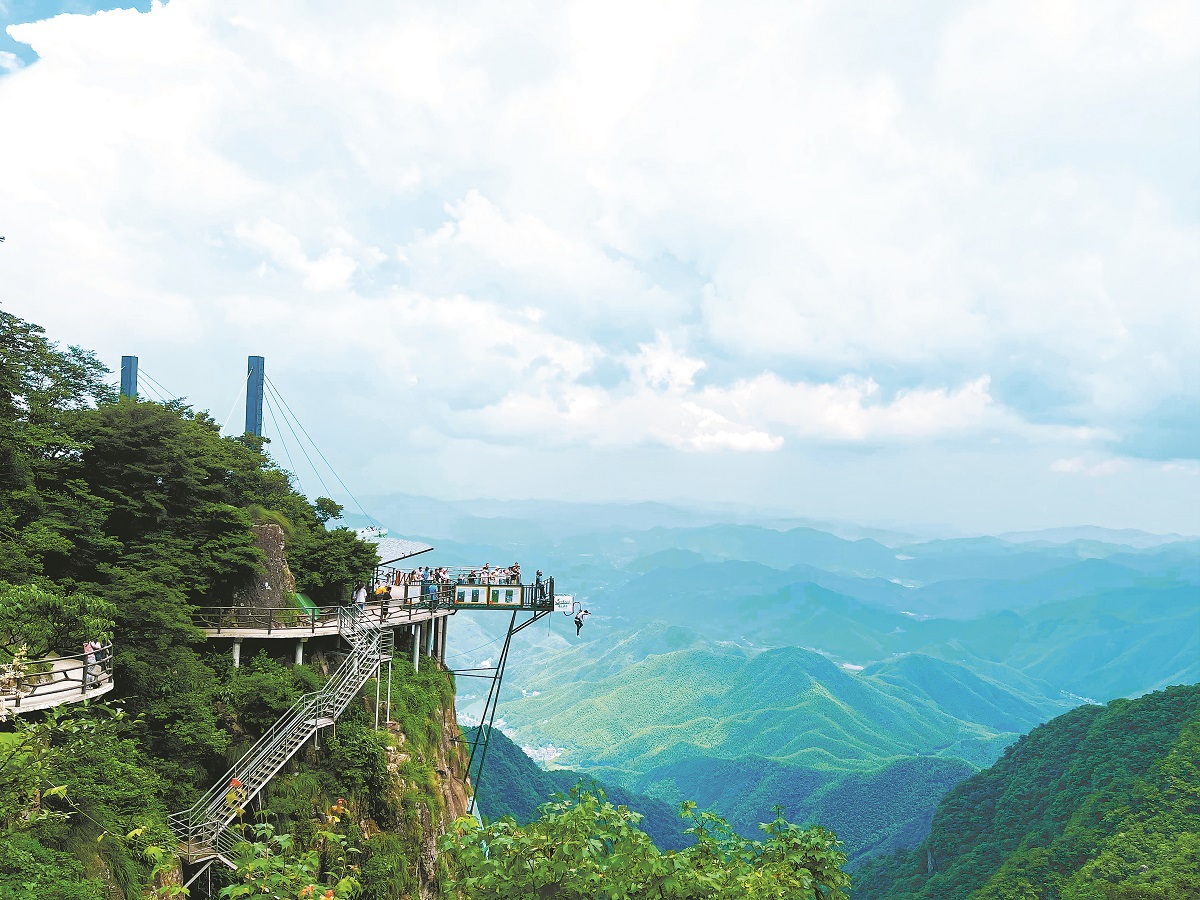
However, looking from the platform seemed like peering at a bottomless pit. "It felt like I was jumping off a building to my death," Cao said.
For two to three excruciating minutes, he stood frozen, a silent battle raging within. "There were people waiting in line behind me. They were cheering, but it just felt like pressure," he said.
He eventually jumped, thinking: "I've already come all this way, and I'm a man. If I don't jump, how humiliating would that be?"
The defining feature of the Cloud Meadow wonang jump is not the fall, but the save. A speed regulator on the jump cord arrests the plunge not with a violent jerk, but with a smooth, gradual deceleration.
"It wasn't uncomfortable. There was a little tug, but it was a process, not an instant stop," Cao explained.
The initial frantic leap is transformed into a serene, controlled descent. "That's when I dared to open my eyes. The slow part was actually comfortable. Like a gentle, floating landing," Cao said.
His "wimp leap" was a microcosm of a broader shift in China's experience economy.
It's no longer about conquering nature or one's own limits in a dramatic, heroic fashion. Instead, the new trend caters to a rising number of urbanites who pursue a managed, accessible thrill — mostly in the form of a challenge — that maintains a reasonable comfort level, while pushing them just enough to feel a sense of triumph.
In contrast to the 2023 "special forces-style" travel craze characterized by a fast-paced, intense itinerary, "wonang travel" is built around minimal exertion, maximum comfort.




